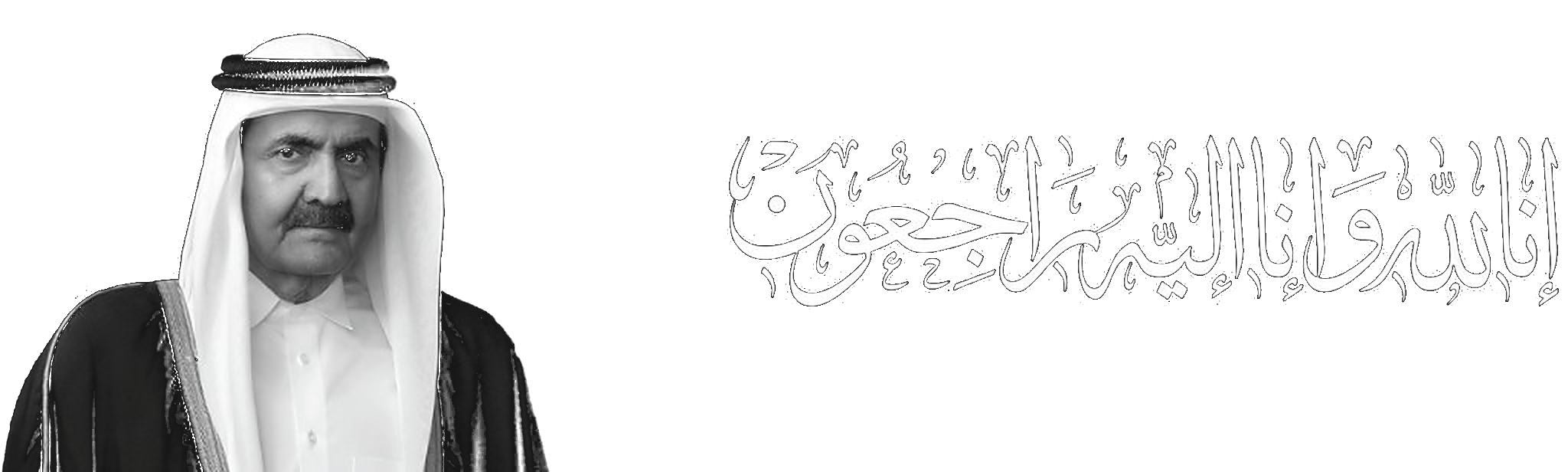
Her Highness Sheikha Moza bint Nasser
Her Highness' Speech at James Baker Institute
Ladies and Gentlemen,
I am pleased to be here this evening, But I am afraid I have to make a confession Up front.
Over the past few years, I have often been asked to engage in public discussions on the statue of women in the Middle East.
And I have usually politely refused. I have done so because I strongly believe that separating that status of women from larger issues in the region is an endeavor So I loaded with political history, and so burdened with misconceptions that it has become a counterproductive methodology.
Let me give you an example. I was recently fascinated by a cooperative of attitudes of Muslim women and Western women.
In a Gallup 2005 poll, conducted in American households, respondent were asked “What do you admire least about the Muslim world?” The vast majority of American women answered “Gender inequality”.
Why would the average American woman respond in this way? Is she making a well informed judgment? or has her answer been engineered through centuries of popular mythologies about Muslim women? and does a reinvigorated academic discourse, that continues to decontextualize the women’s issue, a discourse that find its way onto talk shows and women’s magazine, have anything to do with this opinion making? it might surprise those respondents to know that is another Gallup poll, this time in the Muslim world in 2005, Muslims, men and women, responded quite differently to a similar question.
When asked what they perceived at their societies biggest problem, they didn’t mention gender inequality. men and women
alike cited the same problems: Lack of unity among Muslims, extremism and political corruption.
Aren’t these the very same culprits behind the human rights violations we are face in the region?
Ladies and Gentlemen
The debate over women in the Middle East ignores this larger political and social reality it swings dangerously between two poles: Patronage and apologism the first group follows the line of colonial feminism in the hope of enlightening the women of the Middle East they perceive and endless clashbetween secularism and religion.
They hope we will come to our senses and reach the same types of rights and freedoms as they have, only guaranteed, of course, by secularism. However, this is not our present nor is it our history.
We don’t believe we have to disregard our religion to achieve our rights.
In fact, polls show that men and women throughout the region unequivocally states, without difference between them,
that what they admire most about their own society is faith and spiritual values.
On the other side of the debate, there is a growing branch of radicalism that denies problems with women’s issues in the region. They paint a glorious picture of how Muslim women are superior to Western women, and claim that a return to their version of Islam. Is all that is needed? to guarantee women’s rights.
This view feeds on mistrust that the women’s movement has been co opted for other political objectives, just as democratization has been co opted those women’s rights have become a cover for a secularist agenda to annihilate our identity and religion. And that women have become a political commodity, and indicator or progression or regression, used for the cynical objectives of gaining or granting approval to certain regimes.I believe it is time to demagnetize these two poles
In fact we should not frame this debate as a battle between secularism and radicalism; Rather, the discussion should focus
on how we can guarantee human rights across the board.
Ladies and Gentlemen ..
The human rights problems throughout the region have been well documented. In fact, the entire world is facing serious deficits in human rights, particularly since September 11th and the ensuing “war on terror”.
We are well aware that gross human rights violations are being carried out in the name of security and democracy.
So, any discussion about human rights violations in the Middle East needs to start here. and it is within this context that we can discuss women as members of a large community, undergoing tremendous violation of their rights, both by their governments and foreign occupiers. Their rights to education, to security, to health, to work, to political participation –
All of the topics many of you will discuss tomorrow. Let us take a few examples from this endless list of violations.
First of all Education. We cannot deny the current situation world wide illiteracy rates for women are higher than for men.
In the Arab region , about 58 million people are illiterate and 66 percent of these are women.
Yet, how can we talk seriously? of reliable literary rates in a region. That is so ravaged by war and conflict?
Where basic survival has become a priority and education a luxury? consider Lebanon, Iraq, and Palestine
Where civilian buildings, including schools, have been internationally targeted, educators murdered and the basic necessities of education embargoed.
It simply doesn’t make sense to focus only on women’s illiteracy rates without considering this context.
For example, the Arab Human Development Report of 2005 conceded that in countries of the region not torn by war,
the rates of enrollment for women are higher than for men. In Qatar, we have an overall literacy rate of 90.6%,
and the rate for women is higher than that for men.
As scholars we need to call for more in-depth studies that innovatively analyze the real reasons behind the gender gaps in education. I suspect we may discover that higher illiteracy rates for women are more often related to war, and poverty than to patriarchal local traditions and religions but let me clear.
There is no doubt that our educational systems throughout the Middle East face serious problems.
Antiquated pedagogy, disruption from war, inadequate funding, lack of academic freedom, a disconnection between education and the workplace. But these are problems shared by all our citizens, men and women.
Likewise, the economic problems of the region are shared by men and women alike.
High rates of youth unemployment, economies those are not sustainable, over dependence on foreign labor, unequal distribution of wealth, and over regulated economies affect both men and women.
It is quite enlightening at this point to consider the history of women’s economic participation in our region.
The Middle East has a long tradition of female entrepreneurs. We often give the example of the wise business woman
Khadija also wife of the Prophet (PBUH). However, she was not an exception. There is ample historical evidence to show that women were active in the market even before Islam.
And this was later taken for granted in the Quran. The Quran sets forward details about work ethics, of how transactions can be carried out, how to divide wealth, many fine economic details.
However, it never once mentions that women are forbidden to work in any area whatsoever.
To the contrary, the Quaran allowed women to maintain their financial and property rights after marriage, while the opposite
was happening in Europe; Further, Sharia court records, from the Otoman Empire, show that women were very influential owners of awqaf and supported various religious, cultural and philanthropic institutions.
Today, many women in our region are involved in the regeneration of NGO’s, Foundation and trust – true to the awqaf tradition. If fact, the Arab Human Development report of 005 notes that since 2003 the Arab region has seen a 19% increase in women’s share in economic activity.
This is more than the world average which is 3% other source estimate that over 25% of private businesses in some of the Gulf countries are owned by women. and in some cities in the Gulf women have as high as a 34% stake in private businesses.
Ladies and Gentlemen
Please bear with me for one more example to support my plea for a deframed research agenda.
Political participation. I cannot see how women’s political participation can be measured as if it is divorced from the political realities of the region. We are speaking about a region where the vast majority of people
are deprived of genuine political rights. A region torn by war and occupation. A region where the few control the many.
Where basic political rights such as freedom of speech, the right of assemble, to form associations, are still either not existent or newly born.
How can we, in all sincerity, talk about women’s political participation in parliaments that are farcical?
Where women are often tokens of progress without any real power? Surely, we will not fall into this faulty analysis.
The reality is that Arab Public opinion clearly endorses women’s political participation: 79% believes women have the right to political participation at all levels equal to men.
Likewise, these political rights are taken for granted in our tradition and religion.
For example, in the Quran, the women’s baya, or vow of allegiance to the Prophet, is the same for men and women.
The truth is there is nothing to prevent women’s political participation, except the factors that prevent whole scale political participation: Occupation, corruption, and tyranny. Academics need to bravely consider these variable in their analyses.
Ladies and Gentlemen
This evening I have appealed to you to contextualize the women’s issue in the Middle East, by considering new research approaches to the past and present.
In order to do this we have to disregard the old frames we have used to define the issues.
These very frames have been the cause of oppressive misinformation. These frames also pressure women to make fabricate choices which have very little to do with their beliefs and real-life conditions.
Scholars have made incredible progress in western academia at deconstructing western patriarchal discourse. I now appeal to them to apply this same vigor to deconstructing the harmful legacy of colonial feminism and the rhetoric religious radicalism.
This requires an honest curiosity about the past, a critical rereading and reconstruction of women’s history in the Middle East and this requires meeting us, Muslim women, as equals. Listening to us, not as objects of your discourse, but as subjects of our past and of our present. If you dare break your frames of the orientalist paintings in which you have placed us, we are willing to show you our real landscape. Our vibrant homelands of mountains and valleys, prosperity and poverty, Peace and war, Seas and deserts, Our lands, Where all of us, Men and women, are struggling to build our future.