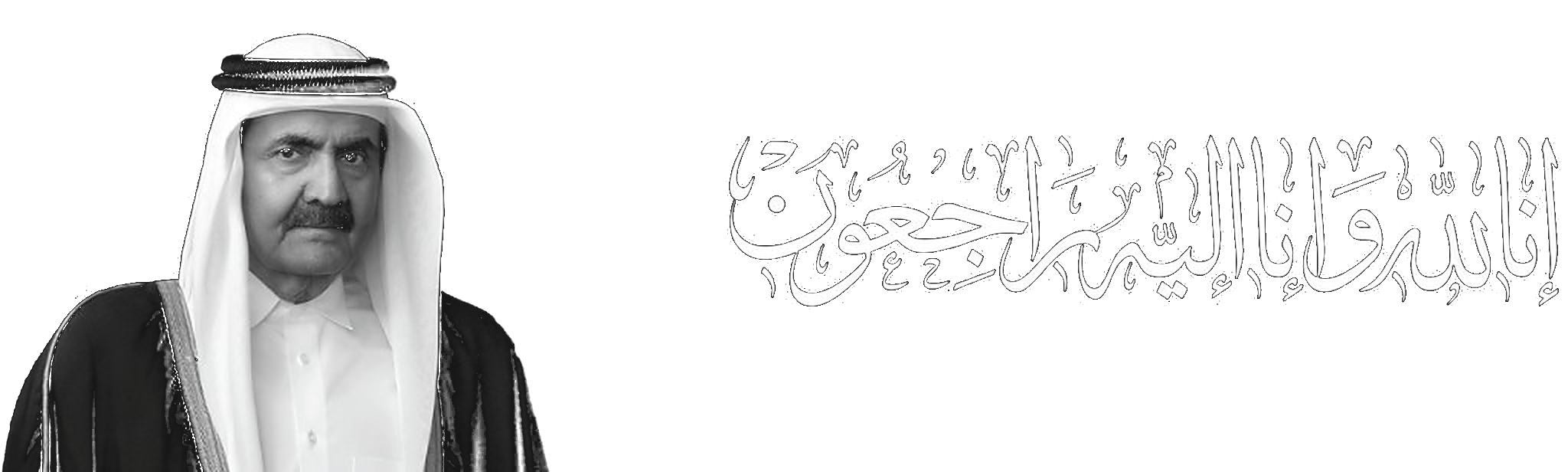
Her Highness Sheikha Moza bint Nasser
2008 Commencement Address- Georgetown University Washington, DC
Graduates, Parents, Georgetown Faculty and Staff, Distinguished Guests:
Good afternoon. My journey to join you here today has been a long one. My home in Qatar on the Arabian Gulf is literally on the other side of the globe. Still, the world feels very small to me, and the similarities and connections between us seem so clear.
It has been many years since I graduated from university, but I remember and share in the joy and the sense of accomplishment that you students feel today. As a mother of seven children, I also share in the pride I see on your parents’ faces. Congratulations to all of you on achieving a magnificent milestone in your lives.
Not only are you graduating from college today, but you are doing so from one of the finest and most benevolent institutions in the world. Georgetown’s reputation is internationally renowned, and its long legacy of promoting social justice and cultural understanding shines as a beacon for us all.
This university has educated Presidents and policymakers… ambassadors and activists… leaders of industry, medicine and law from over 100 countries. A model of human development since 1789, Georgetown has trained generations to think, to analyze and to reason. It has also taught them that regardless of our different cultures, languages and beliefs, we are all interconnected and interdependent.
Like Georgetown, Qatar has made human development a national priority. We know that our people, and particularly our youth, are the key to our future progress. It is for this reason that Qatar Foundation for Education, Science and Community Development asked Georgetown to bring its unparalleled School of Foreign Service to Qatar in 2005. As you know, this program is the recognized international leader in preparing young minds for careers in diplomacy, international ethics and other skills essential on the world stage – especially at this time in our history.
As graduates of this distinguished university, whatever your field of study, you have been given a priceless and powerful gift – you have been given knowledge. It is a driving force…a motivator…an agent of change. Knowledge is not simply the possession of information but the ability and the aptitude to apply it for the betterment of others. Knowledge imposes responsibility.
So today, as you stand at this critical juncture in your lives, at the end of one journey and poised to begin another, I want to ask you a very important question: What do you intend to do with your knowledge? You now have the means to make a contribution. What form will it take? The answer will be different for each of you, but all of them will be right.
During your college career, your mission was fairly straightforward: to grow and to learn. By its nature, the transition from teenager to young adult is a journey of self-discovery. It is during these pivotal years that you began to determine who you are…what you believe… what kind of person you want to be…what kind of life you want to lead. Whether consciously or not, it is here that you started establishing priorities and assigning value to the things in your life. These decisions will guide your next steps, as mine have guided me.
When I was young, my father inspired in me a love of education and a belief in its ability to change lives for the better. Through education, through the pursuit and attainment of knowledge, all things become possible. Moreover, the development of the individual facilitates the development of society and makes a nation strong. It also encourages democratization and the establishment of individual rights, which are ideals that are valued in my country.
My husband the Emir of Qatar is also a committed advocate of education and development, and together we have dedicated much of our lives to improving opportunities for the citizens of our country. In 1995, with the belief that a nation’s greatest resource is the potential of its people, the Emir created Qatar Foundation of which I serve as Chairperson.
Our most significant project has been Education City which is a 2,500 acre campus that hosts the branch campuses of six leading American universities. Strategically selected, these universities are widely known for offering top quality degree programs in disciplines critical to Qatar’s advancement: medicine, engineering, business, computer science, design, journalism and, of course, international affairs. As a result of this effort, the young people of Qatar and the region now have the opportunity to study at some of the best schools in the world without traveling far from home.
Education City also hosts Qatar Science and Technology Park, a business incubator for technology-based enterprises in a free zone that encourages research and development. There are currently 15 members, including Microsoft, General Electric, Cisco and ExxonMobil.
Another major project is Sidra Medical and Research Center which will be a premier academic medical center based on the American model. Endowed with $7.9 billion from Qatar Foundation, it will provide healthcare and medical education to western standards and will house a state-of-the-art biomedical research center. Not only will Sidra and the science park contribute to Qatar’s knowledge base, but they will greatly expand opportunities for employment and growth for our people.
Most recently, my office established a new youth employment and engagement initiative called Silatech, a name derived from the Arabic word for connections. The Middle East suffers from the highest youth unemployment rate in the world, resulting in economic, political, social and even security concerns. I currently serve as a member of the High Level Group that guides the work of the UN Alliance of Civilizations. The Alliance assesses the forces that contribute to extremism and recommends collective action to counter those forces. Youth unemployment is perhaps the greatest risk we face. Young people who are not engaged in meaningful work can become disillusioned and disenfranchised, making them more susceptible to polarization, extremism, even terrorism.
Silatech is intended to actively address the youth unemployment issue in Qatar and the region. Through partnerships with the global business community, this initiative will harness the best of new technologies, resources and ideas to create worthwhile jobs and opportunities for young adults between the ages of 18 and 30.
While the initial focus of the Silatech program is the Middle East and North Africa, we hope to expand its reach in the future. Countries and their leaders can no longer afford to look only as far as their own borders. We must all strive to become responsible global citizens, a concept that Georgetown both practices and preaches. Qatar has a long tradition in this regard. In recent years, we formed an organization called Reach Out to Asia to provide on-going aid and assistance after the tsunami and earthquakes in the Indian Ocean in 2004 and 2005. We also sent aid to the US after Sept 11 and Hurricane Katrina. In Iraq and Sudan, we are helping to fund schools and hospitals. This sense of being a citizen of the world is a legacy we hope to inspire in Qatar’s future generations.
On a final note, I understand that reflection is an important component of a Georgetown education, so I want to leave you with this thought: The impact of a positive action in one part of the world can wash across the globe like ripples in a pond, expanding in ever-widening circles. Whatever path you choose, this university has prepared you to make a contribution to the greater good, to live a life of leadership and service.
You have the opportunity. You have the tools. And you have the knowledge.
I wish you well. Thank you.